Connected Smoke Detection with Climate Monitoring
A LoRaWAN smoke detector does more than detect smoke — it also continuously monitors temperature and humidity in the room where it is installed, turning a safety device into a year-round source of indoor climate data. Connected to Sensor-Online, the device provides real-time fire alerts, climate trend visibility and automated escalation without any cabling.
How LoRaWAN Smoke Detectors Work
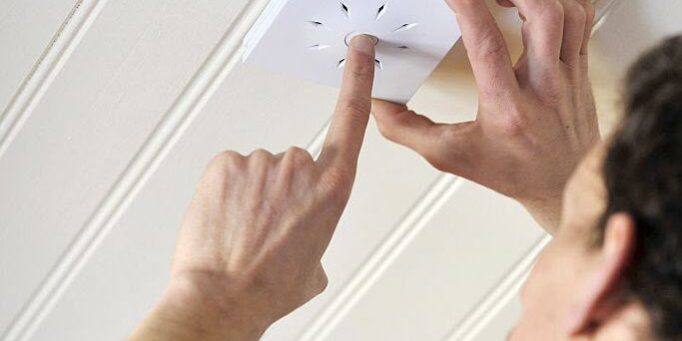
LoRaWAN smoke detectors use optical or photoelectric detection to sense combustion particles, triggering an immediate alarm payload transmitted over the LoRaWAN network. This alarm reaches Sensor-Online within seconds and can trigger SMS, email or webhook notifications to property managers, security companies or fire response teams.
In parallel with alarm events, the device sends regular uplinks containing:
- Current temperature (°C)
- Relative humidity (%)
- Battery voltage (for proactive replacement scheduling)
- Self-test results (tamper, cover removal)
Advantages Over Standalone Smoke Detectors
Traditional standalone smoke detectors are passive — they alarm locally but no one is notified unless someone is in the building to hear the alarm. Connected LoRaWAN detectors eliminate this gap:
- Remote notification — property managers receive alerts on phone or email regardless of location
- Alarm escalation — Sensor-Online can escalate to a secondary contact if the primary does not acknowledge within a defined time
- Battery monitoring — automatic alert when battery is low, replacing manual annual inspection rounds
- Indoor climate data — the temperature and humidity data from smoke detectors provides a free room-level climate picture across an entire building
Deployment in Multi-Unit Residential Buildings
In Swedish apartment buildings (BRF and rental), fire safety regulations require smoke detectors in each apartment. Replacing traditional detectors with LoRaWAN-connected units gives the property owner complete visibility across the entire portfolio without entering each apartment for inspection. Coverage map, alarm history and battery status for every detector are visible in Sensor-Online.
The same temperature and humidity data provides early warning of moisture-related issues (mould risk) and can be used as supplementary room temperature data for energy optimisation.
Integration with Alarm Systems and Building Management
Sensor-Online’s alarm engine routes smoke detector events to any combination of:
- SMS to on-call property staff
- Email to a security monitoring service
- Webhook to an external alarm central or incident management system
- MQTT to a BMS or SCADA
FAQ: LoRaWAN Smoke Detectors
Do LoRaWAN smoke detectors meet Swedish fire safety requirements?
Yes. LoRaWAN smoke detectors with EN 14604 certification meet the requirements for residential smoke alarms in Sweden. Always verify the certification mark on the specific product.
How long is the battery life?
Typical LoRaWAN smoke detectors have a battery life of 5–10 years depending on transmission interval and LoRaWAN network conditions. Sensor-Online monitors battery voltage and alerts before the device reaches a critical level.
Can I see which specific apartment triggered an alarm?
Yes. Each detector is named and located in Sensor-Online’s device tree. When an alarm fires, the notification includes the sensor name, location description and exact timestamp.
Explore smoke detector options at sensor-online.se/sensorer/ or read more about smart building solutions.