As buildings and cities become increasingly connected, the need for a unified digital infrastructure grows rapidly. A modern IoT platform acts as the central intelligence layer, bridging technologies, systems, and protocols that were never designed to communicate with each other.
Whether managing HVAC systems, energy meters, indoor climate sensors, or traffic and environmental infrastructure, the IoT platform turns fragmented data streams into a cohesive, scalable, and intelligent ecosystem.
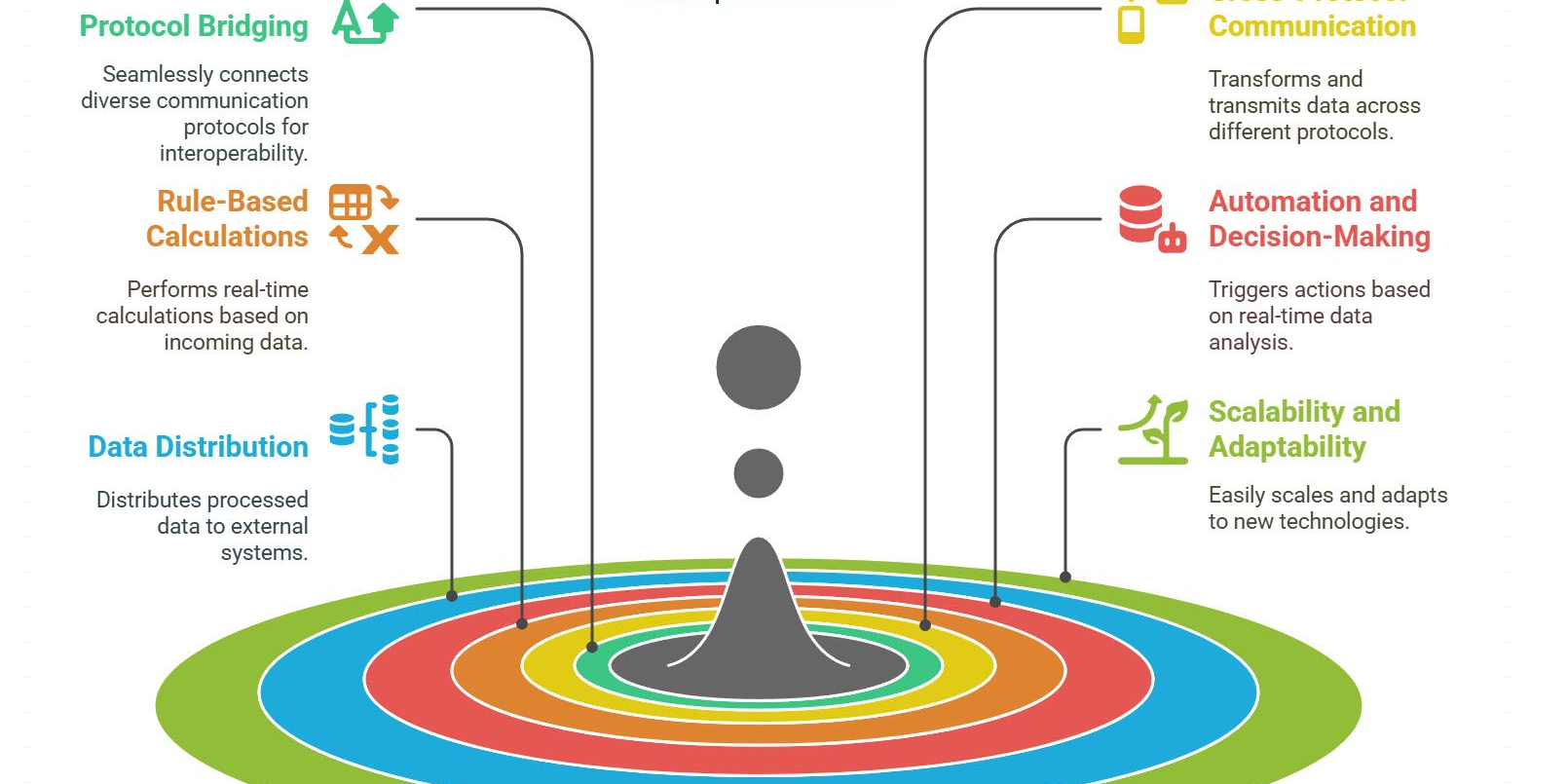
🔗 Unifying Technologies Through Protocol Bridging
Smart environments rely on a wide variety of communication standards—LoRaWAN, MQTT, M-Bus, Modbus, BACnet, and more. Without a platform to unify them, data becomes siloed and difficult to use.
Key capabilities include:
1️⃣ Protocol Bridging & Data Normalization
The platform collects data from heterogeneous sources and converts it into a unified data format.
This ensures consistent handling of:
-
- Metering data
- Sensor readings
- Control commands
- Alerts & events
Normalized data becomes easier to process, visualize, compare, and share.
2️⃣ Cross-Protocol Communication
A powerful IoT platform doesn’t just read data—it can translate it.
Example:
📌 Convert M-Bus meter readings → into MQTT payloads for integration with a Building Management System (BMS).
This cross-protocol capability eliminates integration friction and expands interoperability across legacy and next-generation systems.
📊 Real-Time Analytics & Intelligent Rule Engines
Beyond data collection, the platform enables real-time intelligence:
-
- Indoor air quality scoring
- Energy efficiency calculations
- Dynamic thresholds based on past behaviour
- Consumption forecasting using historical trends
These insights allow operators to identify anomalies, optimize performance, and reduce energy waste.
⚙️ Automation & Smart Decision-Making
Rule-based logic enables automated actions that improve safety and efficiency.
Examples include:
-
- Activating HVAC when temperature exceeds safe limits
- Sending alerts when water consumption spikes abnormally
- Adjusting ventilation based on CO₂ levels
- Triggering maintenance workflows when vibration values exceed thresholds
Automation ensures systems respond proactively rather than reactively.
🔌 Seamless Data Distribution & System Integration
A modern IoT platform doesn’t just analyze data—it distributes it to the right systems in the right formats.
Data can be routed to:
-
- Dashboards
- ERP systems
- Maintenance & asset management tools
- National energy or water data hubs
- Cloud analytics platforms (Azure, AWS, Google Cloud)
By preserving protocol compatibility and data structure, integration becomes plug-and-play instead of a complex engineering challenge.
🚀 Built for Scalability & Future-Proofing
Smart cities and buildings are constantly evolving.
An enterprise-grade IoT platform adapts seamlessly by supporting:
-
- New sensor types
- Additional communication protocols
- Larger device fleets
- New software standards and APIs
No architectural redesigns required — the platform grows with your infrastructure.
✅ Conclusion
A modern IoT platform transforms isolated technologies into a unified, intelligent, and scalable system.
By delivering actionable insights, enabling automation, and ensuring long-term flexibility, it becomes a strategic foundation for any smart building or smart city initiative.
Whether improving operational efficiency, reducing energy consumption, enhancing safety, or unlocking new digital services — the IoT platform is the engine that makes it all possible.